
Common Questions About Luzerne County Court Records
How do I search Luzerne County court records online?
Use the Pennsylvania UJS Web Portal at ujsportal.pacourts.us/CaseSearch for criminal, traffic, magisterial, and appellate dockets. For civil case index and documents, use the county Prothonotary viewer at searchiqs.com/paluz. Estate and marriage indexes sit on the Register of Wills IQS Infodex. The right tool depends on the case type, since the county splits records across offices. For the full walkthrough of each portal and what it shows, see the Luzerne County court records page.
What court is Luzerne County in?
Luzerne County is the 11th Judicial District of Pennsylvania. Its main trial court is the Court of Common Pleas in Wilkes-Barre, which hears criminal, civil, family, and Orphans' Court matters. Below it sit the Magisterial District Courts, the local minor courts that handle traffic tickets, small claims, and preliminary hearings. Appeals go up to the Superior Court or Commonwealth Court. You can read more about the structure on the Court of Common Pleas page.
What is the difference between the Prothonotary and the Clerk of Courts?
The Prothonotary keeps civil and family records, such as complaints, divorce, custody, Protection From Abuse, judgments, and liens. The Clerk of Courts keeps criminal, juvenile, and dependency records and handles expungements and limited access. They are two offices with two different jobs, though in Luzerne County they share one department manager under home rule. Both are profiled on the Prothonotary and Clerk of Courts page.
Where are probate records?
Probate records are with the Register of Wills / Clerk of Orphans' Court at 153 North River Street, Wilkes-Barre. This office probates wills, appoints personal representatives, issues short certificates, and acts as the inheritance-tax agent for the state. It is not a separate probate court; Pennsylvania handles estates through the Register of Wills. Estate records from 2004 forward are online, with older indexes back to 1875. See the probate records page for fees and the filing steps.
Can I see family court documents online?
Generally no. The UJS portal may show limited family docket information, but the actual family documents are not posted online. This covers divorce, custody, support, and Protection From Abuse filings. To get certified copies, contact the Prothonotary, which holds these civil and family records. The marriage and divorce records page explains how to request divorce decrees and what the office can release.
How do I look up an inmate in the Luzerne County jail?
There is no public online roster for the county jail. Call the Correctional Facility at 570-829-7741 to confirm whether someone is held there. The county "Inmate Lookup Tool" link actually points to the state PA DOC locator, which only covers state-sentenced inmates, not county detainees. For the full picture on how to verify custody, the tools that exist, and what each one covers, see the inmate records page.
Who runs the Luzerne County jail?
The county Division of Corrections runs the jail, overseen by the County Manager under the home-rule charter rather than a traditional independent Prison Board. The facility sits at 99 Water Street, Wilkes-Barre. County Council created a Correctional Services Committee in 2026 to review jail policy and budget. More facility and population context is on the inmate records page.
Where is the Luzerne County Courthouse?
The Luzerne County Courthouse is at 200 North River Street, Wilkes-Barre, PA 18711. The general court phone is 570-825-1500. The building holds the Court of Common Pleas and most court-facing offices, including the Prothonotary, Clerk of Courts, and Sheriff. The Register of Wills public office is nearby at 153 North River Street. The court records page covers the courthouse and the offices inside it.
Are Luzerne County court records public?
Many are public, but access is not absolute. Juvenile, expunged, limited-access, family, probate, adoption, and mental-health records can be restricted. Confidential identifiers like Social Security and driver license numbers are masked under court policy. Court case records follow the UJS access policy, not the open-records law. For the legal framework and what stays sealed, see the public records page.
How do I get a criminal background check?
Use PATCH at epatch.pa.gov, the Pennsylvania Access To Criminal History system run by the State Police. A record check costs $22.00. A plain UJS docket search is helpful, but it is not an official background check, so employers and agencies that need a formal result should use PATCH. The criminal records page explains the difference and walks through the request.
How do I pay a traffic ticket or court costs?
Use PAePay through the UJS Web Portal Pay Online menu. A 2.75% convenience fee applies, and a single transaction is capped at $2,500. One key point: paying a traffic citation online enters a guilty plea to the charge. If you want to fight the ticket, do not pay it; request a hearing instead. The traffic court records page covers paying, contesting, and the court versus driver record split.
How do I get a copy of a divorce decree?
Divorce records are kept by the Prothonotary, since divorce is a civil and family matter. The actual documents are not available online, so you cannot just print a decree from a portal. Contact the Prothonotary at 570-825-1745 for certified copies and the current fees. The marriage and divorce records page lays out the request process and the office hours.
How do I probate an estate?
Start with the Register of Wills in the county where the person lived. File a Petition for Grant of Letters: letters testamentary if there is a will, letters of administration if there is not. Fees are graduated by estate value, and short certificates are issued after probate so the representative can access assets. The full fee schedule and the step-by-step are on the probate records page.
How do I get a marriage license?
Apply at the Register of Wills with a government photo ID and your Social Security number. Both applicants must appear together, and both must be 18 or older. The fee is $50.00 at application. Pennsylvania has a 3-day waiting period before the ceremony, and the license is valid for 60 days. You can start online first. See the marriage and divorce records page for the requirements and steps.
What is expungement versus limited access?
Expungement removes eligible criminal history record information. Limited access, known as Clean Slate, seals records from public view but keeps them available to courts and law enforcement. The Luzerne County Clerk of Courts processes both, and limited-access eligibility generally requires being 10 years arrest-free. Even sealed records stay open to criminal-justice agencies. Find the forms and fee details on the Clerk of Courts page.
How do I resolve an outstanding warrant?
Verify the warrant through official channels first: the UJS docket, the Sheriff's Department at 570-825-1651, the Clerk of Courts, or the issuing Magisterial District Court. Do not rely on third-party warrant sites. If you missed a court date, contact the issuing court or counsel, and speak with the Public Defender if you are eligible before appearing. The warrant records page explains warrant types and the steps to clear one.
How do I file a Right-to-Know request?
Submit a written request to the correct county Open Records Officer; the county does not accept anonymous requests. The agency must respond within 5 business days, and appeals go to the state Office of Open Records within 15 business days. Court case records are different and use the UJS portal, not the Right-to-Know process. The public records page details the request and appeal steps.
Where to Find Forms and Portal Help
Many questions on this page come down to finding the right form or learning a portal. Pennsylvania publishes a statewide forms library, and the UJS portal has its own help center. The Pennsylvania courts forms library is a good first stop for divorce, custody, and other common filings.
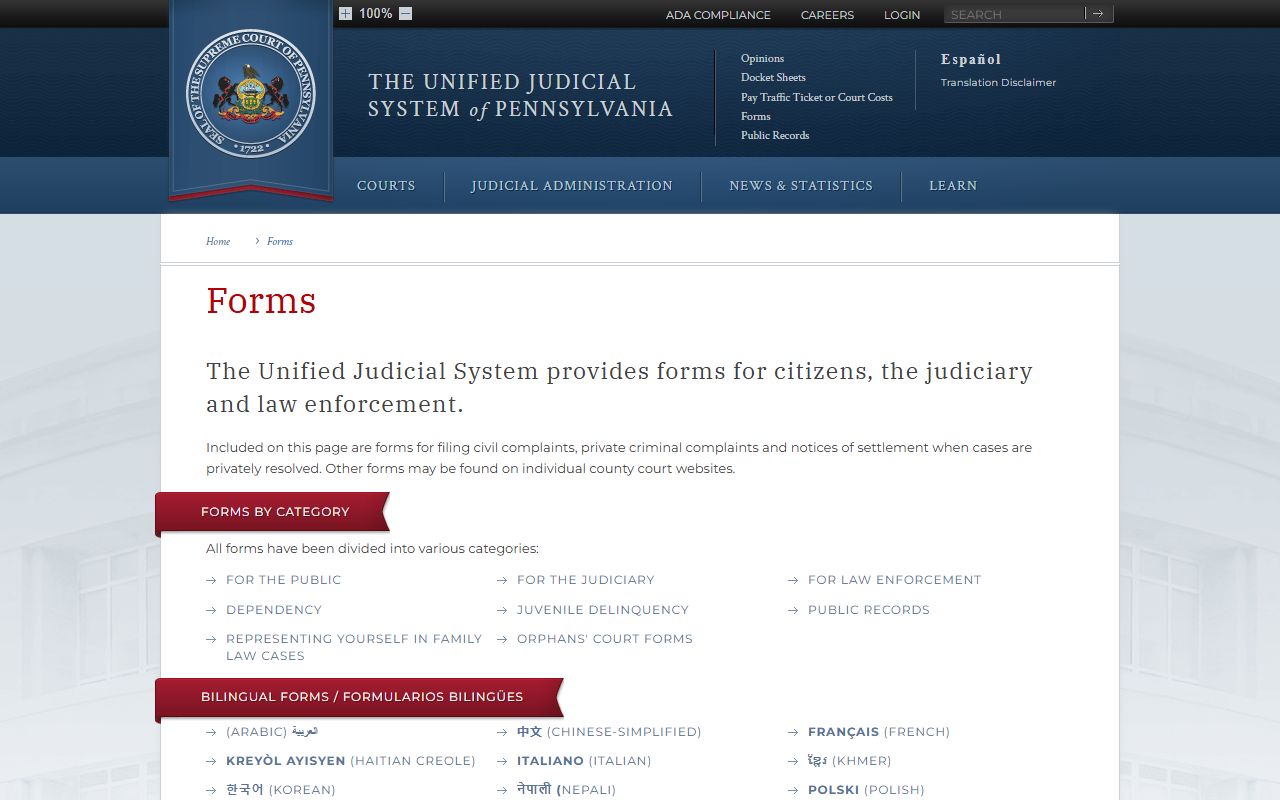
The forms page groups documents by topic so you can grab the right one before you file in Luzerne County. If the trouble is the search tool itself, the portal help center is the next stop.
When a search will not run or a docket looks off, the official help guide walks through the fields and common errors. The UJS Web Portal help center answers most portal questions.
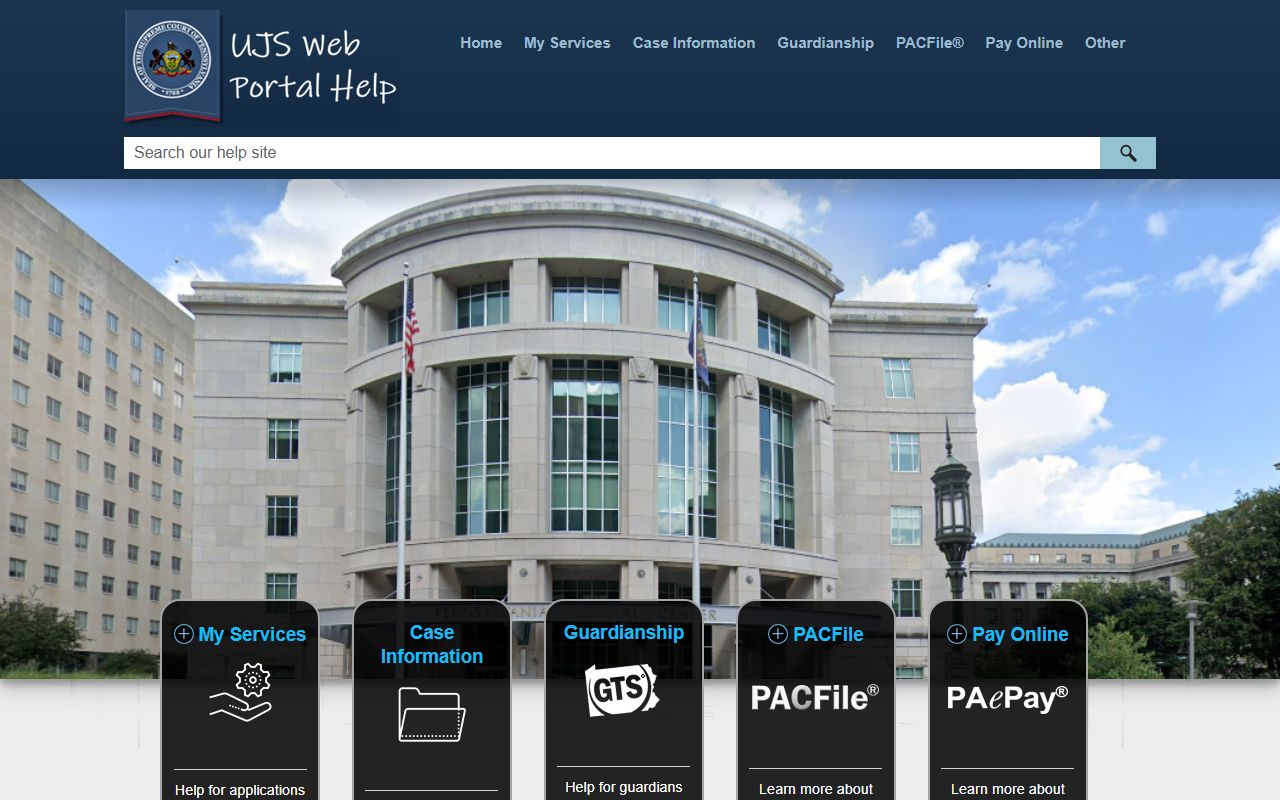
That guide is the place to learn how to read a docket sheet and why some Luzerne County cases do not appear in search results.
Still Have Questions?
For the right office, see Prothonotary & Clerk of Courts. For broader access rules, see public records. For records-by-topic, browse court records, criminal records, inmate records, warrant records, marriage and divorce, traffic court records, or probate.