
Arrest Records in Luzerne County
An arrest record is created by the agency that makes the arrest. In Luzerne County, that is most often a municipal police department or the Pennsylvania State Police. The Luzerne County Sheriff's Department also makes arrests when it serves arrest warrants and bench warrants. The record notes who was taken into custody, the date, and the charges the officer filed. It may list a booking number, the arresting agency, and an offense tracking number, called an OTN. An arrest record marks the start of a case. It does not say how that case ended.
After an arrest, a person is usually brought before a Magisterial District Judge for a preliminary arraignment. In Luzerne County this often happens at Central Court, 77 Water Street in Wilkes-Barre, which handles central processing for the area. The judge sets bail and reads the charges. If bail is not posted, the person is committed to the county jail, the Luzerne County Division of Corrections. From there the case moves toward a preliminary hearing and, if held for court, into the Court of Common Pleas.
It helps to keep three things apart. An arrest record comes from police. A criminal court record comes from the court once charges are filed, and it lives with the Clerk of Courts. A conviction is only one possible result of a case. Full criminal case history is covered on the Luzerne County court records page. Here the focus stays on the arrest itself and on how to find recent arrests.
How to Search Luzerne County Arrest Records
Luzerne County does not publish a single public arrest blotter that lists every booking online. To track an arrest, you usually work through the court docket once charges are filed, and through the jail for current custody. The Pennsylvania UJS Web Portal shows criminal dockets for Common Pleas and the Magisterial District Courts, and that is where an arrest first shows up as a filed case. You can search by name, docket number, OTN, or complaint number.
- Open the UJS case search and pick a Search By type, such as Participant Name or OTN.
- Set County to Luzerne, or Judicial District 11, to narrow the results.
- Choose the Docket Type, usually Criminal or Non-Traffic, then run the search.
- Open the matching docket to view charges, bail, the arresting agency, and the next hearing date.
To confirm that someone is in custody right now, call the Luzerne County Division of Corrections at 570-829-7741. The county does not run a verified public online jail roster. For a full statewide criminal history, use the state tools described further down. Each path answers a different question, so pick the one that fits what you need to know.
The first county screenshot below comes from the UJS criminal case information tool, which is the official source for Common Pleas criminal dockets in Luzerne County. You can reach it through the UJS case information page.
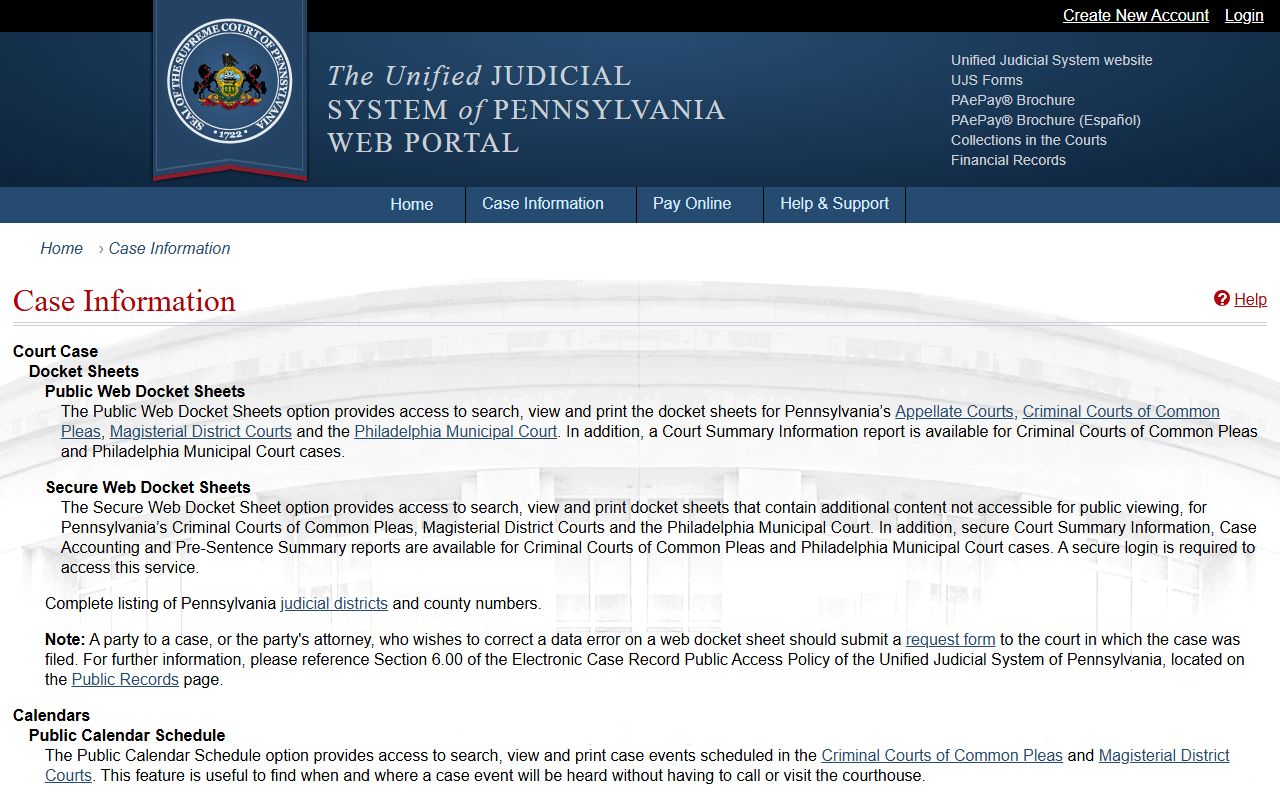
The portal shows the docket that grows out of an arrest once the charges are filed with the court. It is the bridge between the police arrest record and the full Common Pleas case file.
Arrest Records vs. Criminal Court Records
An arrest record and a criminal court record are not the same file. The arrest record is made at booking by the police agency. The criminal court record begins later, when the District Attorney or police file formal charges and the case enters the court system. One is held by law enforcement. The other is held by the Luzerne County Clerk of Courts and tracked in the statewide CPCMS system. They overlap, but they answer different questions.
| Arrest Record | Criminal Court Record | |
|---|---|---|
| Source | Police or Sheriff | Clerk of Courts |
| Created When | At booking | When charges are filed |
| Contents | Booking info, charges, arresting agency, OTN | Pleadings, motions, bail, disposition, sentence |
| Where to Find | Arresting agency, jail, early docket | UJS portal, Clerk of Courts |
Note: An arrest can lead to charges that are later withdrawn or dismissed, so the arrest record and the court outcome may tell two different stories.
Charges vs. Convictions
This is the most common mix-up with arrest records. A charge is an accusation. A conviction is a result. When a person is arrested, the police file charges based on probable cause. That is a low bar. To convict, the Commonwealth must prove the case beyond a reasonable doubt, either at trial or through a guilty plea. Many charges never become convictions. They get dropped, reduced, or beaten in court.
| Charge | Conviction | |
|---|---|---|
| Stage | Accusation at or after arrest | Verdict or guilty plea |
| Burden of Proof | Probable cause | Beyond a reasonable doubt |
| Public Record | Yes | Yes |
| Final? | No, the case is still open | Yes, unless appealed or vacated |
Reading a docket the right way matters here. The disposition field tells you how the case ended. A pending case has no disposition yet. Treat an open charge as just that, an open charge, not proof of guilt.
Sealed vs. Expunged Records
Pennsylvania gives people two main ways to clear or hide a criminal record. They sound alike but they work in very different ways. Expungement removes eligible criminal history record information. Limited access, often called sealing, keeps the record but hides it from public view while courts and police can still see it. The Luzerne County Clerk of Courts handles both kinds of petitions and posts forms for each.
| Sealed (Limited Access) | Expunged | |
|---|---|---|
| Visibility | Hidden from public view | Removed and treated as cleared |
| Law Enforcement | Still has access | Very limited access |
| Authority | 18 Pa.C.S. §§ 9122.1, 9122.2 | 18 Pa.C.S. § 9122 |
| Eligibility | Often 10 years arrest-free | Set by statute and case type |
Pennsylvania also runs Clean Slate, set out in 18 Pa.C.S. § 9122 and the limited-access sections. Clean Slate seals qualifying records by computer, with no petition needed. Petition-based limited access under § 9122.1 still requires a filing. Even after a record is sealed or expunged, criminal justice agencies keep their own copy.
Mugshots and Booking Photos
A mugshot is the booking photo taken when a person is processed into custody. In Luzerne County, booking happens at intake after a preliminary arraignment and commitment. The county does not post a public mugshot gallery on its official sites. Booking photos may be released by the arresting agency in some cases, but access is not guaranteed and policies vary by department.
Be careful with mugshot websites. Many private sites repost booking photos and then charge to take them down. Those sites are not official and are often out of date. Stick to the arresting agency, the court docket, and the jail for accurate, current information about an arrest.
Statewide Criminal Records Search
For a full criminal history check, Pennsylvania uses one main system. It is run by the Pennsylvania State Police, not by the county. The tool is called PATCH, short for Pennsylvania Access To Criminal History. Anyone can request a record check, and the fee is $22 per name. The system returns conviction and pending-charge data that the state holds, drawn from cases across all 67 counties, including Luzerne.
You can start a request at the PATCH portal. The screenshot below shows the PATCH criminal history landing page.
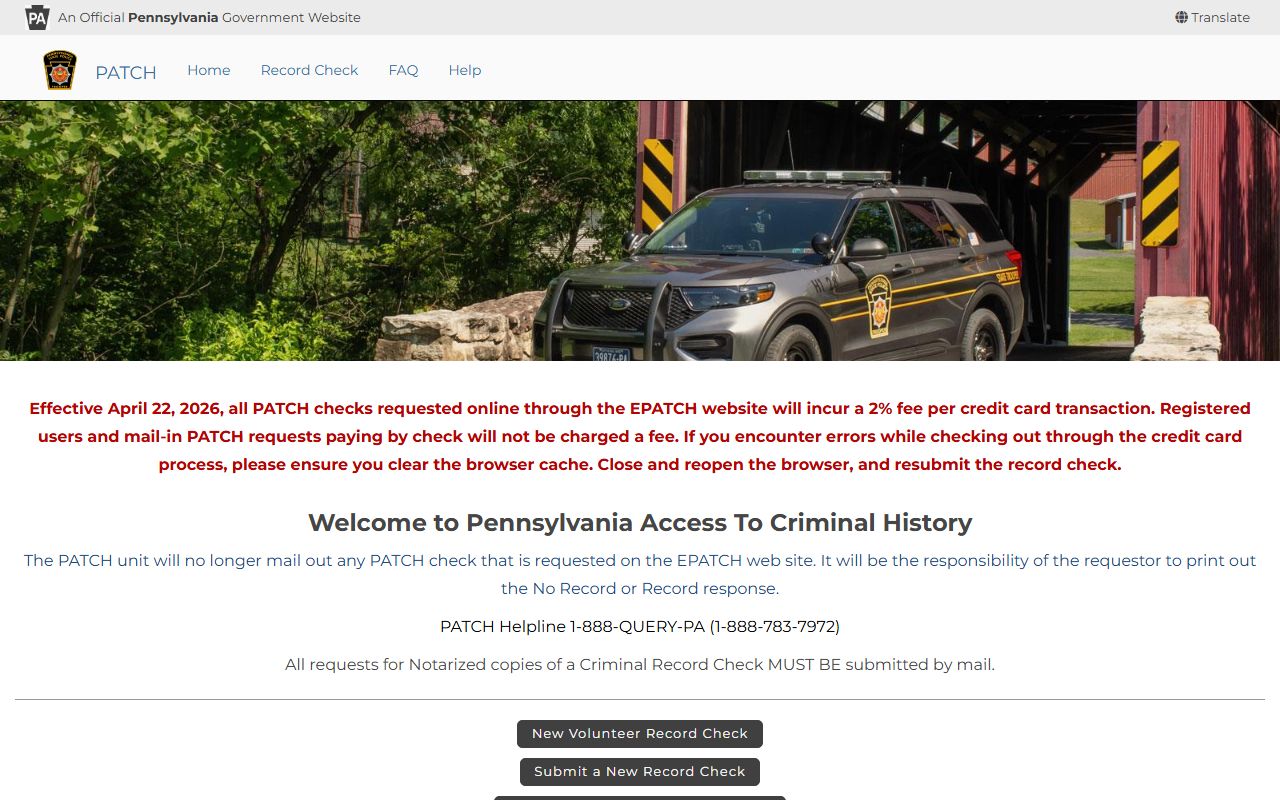
PATCH is the quickest way to pull a statewide record for one person. For mail or in-person help, the State Police also accept criminal history requests directly. Details are on the PA State Police criminal history page, shown below.
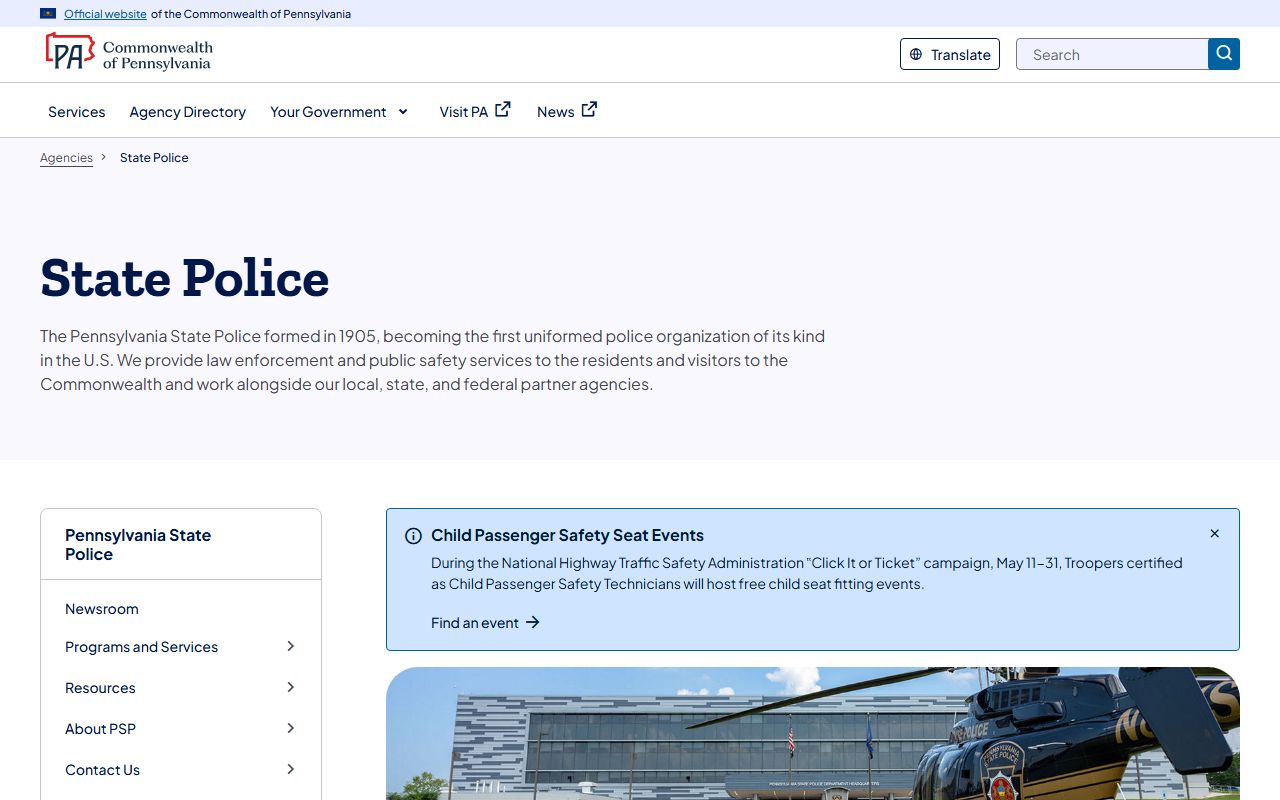
The State Police process is the official route when you need a certified result for a job, a license, or a legal matter. Criminal history data is governed by CHRIA, the Criminal History Record Information Act, found at 18 Pa.C.S. Chapter 91.
Background Check Considerations
There is a real line between a casual name lookup and a formal background check. A casual search of public dockets can tell you a lot, and it is free. But if you plan to use a report for a job, a rental, credit, or insurance, the federal Fair Credit Reporting Act, the FCRA, sets strict rules. Those reports must come from a regulated consumer reporting agency, and the person being checked has rights.
For most everyday questions, the UJS portal and PATCH are enough. They give you official Luzerne County criminal records straight from the source. Just match the result to the right person, since names and birth dates can repeat.
Important: This site is not a consumer reporting agency under the FCRA, and its content cannot be used for employment, tenant, credit, or insurance decisions.
Restricted Criminal Records in Luzerne County
Not every arrest or criminal record is open. Pennsylvania holds back several types. Juvenile case records are restricted under 42 Pa.C.S. § 6307. Expunged records are removed under § 9122. Limited-access and Clean Slate records are sealed from public view. The UJS search itself warns that juvenile, expunged, and limited-access cases may not display in results.
Ongoing investigations are another gap. Police can withhold records that would harm an active case. Some identifiers are always masked too, such as Social Security numbers, driver license numbers, and the names of minors. When a search comes up empty, it does not always mean nothing exists. The record may simply be restricted by law.